
72 hr
Central Mongolia 3-Day Tour: Kharkhorin, Gobi & Khugnu Khan
3-day guided trip from Ulaanbaatar to Kharkhorin, the Semi-Gobi and Khugnu Khan mountain.
Reserve
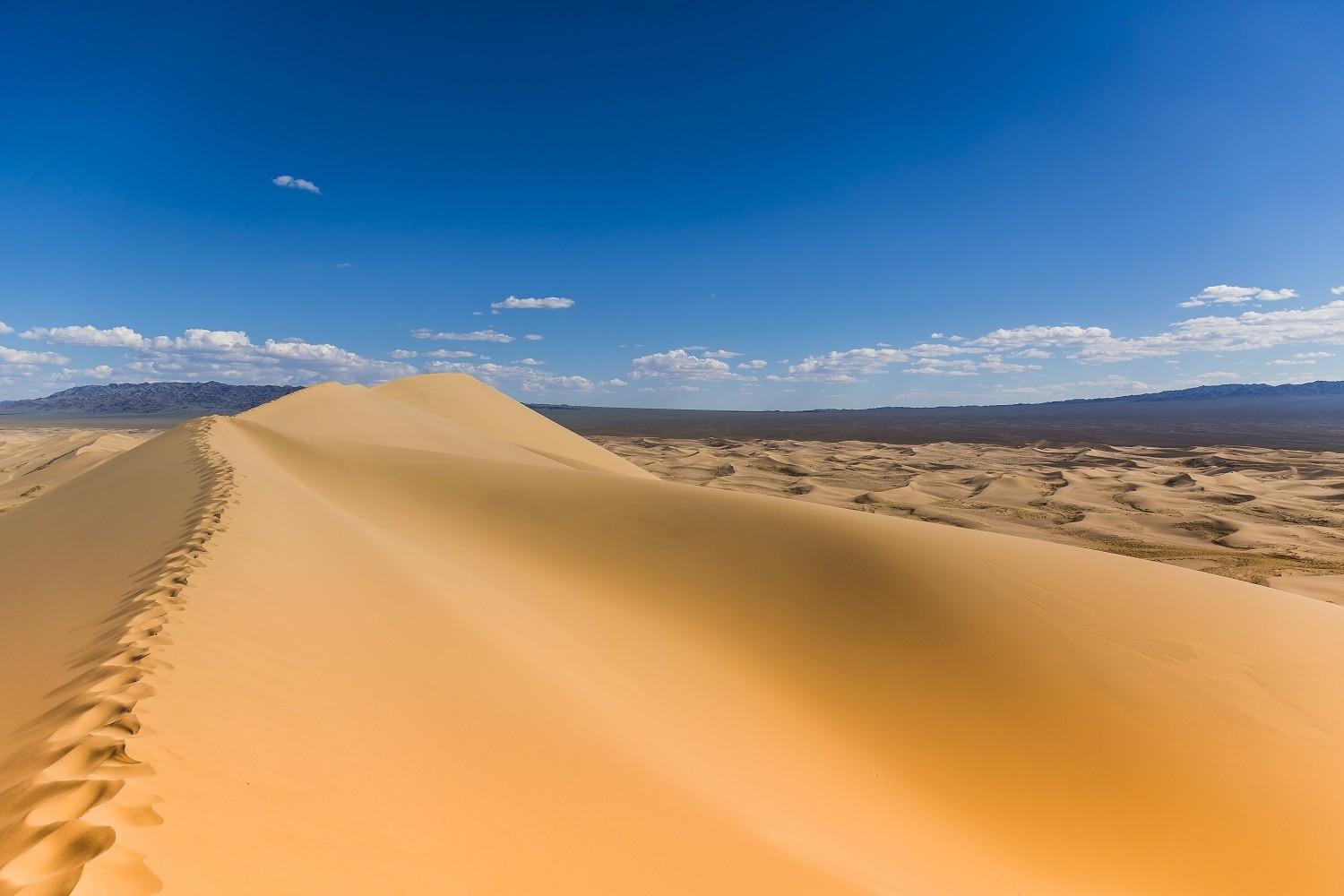
Grass gives way to gravel, gravel gives way to dune.
Hand-picked by our editors — only the best 5 experiences from 60 reviewed.
Verified partners for every tour, free cancellation where available, and instant confirmation on every booking.
72 hr
3-day guided trip from Ulaanbaatar to Kharkhorin, the Semi-Gobi and Khugnu Khan mountain.
Reserve
48 hr
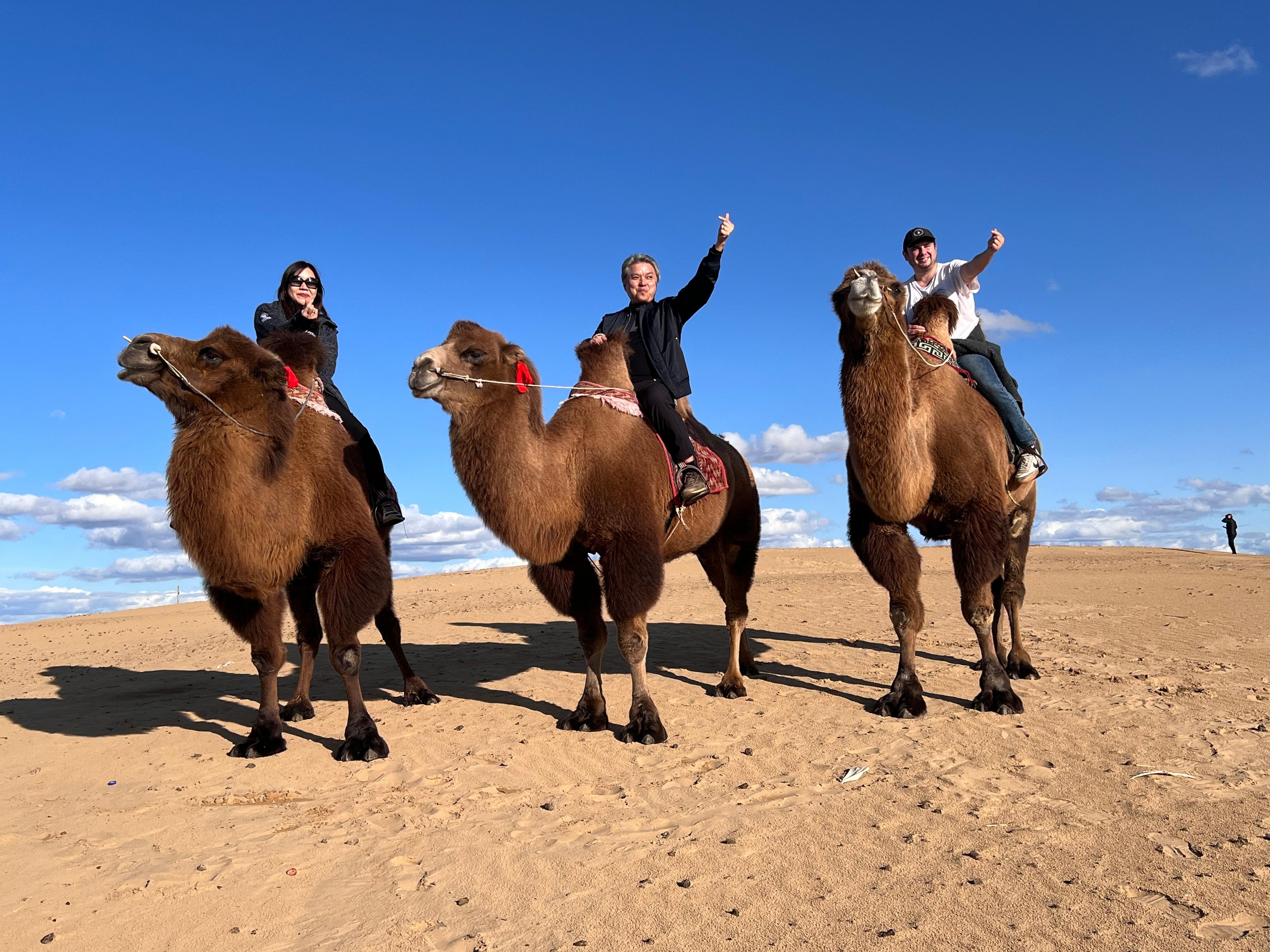
Ancient capital, camel rides on Gobi dunes, a ger camp night, and wild horses in Hustai.
Reserve
48 hr
Overnight escape to Mongolia's ancient capital and mini Gobi sand dunes, camels included.
ReservePrices from verified partners. Availability updates in real time at checkout. Free cancellation policies apply where shown.
The landmarks, rooms, and views travelers on this tour remember — all visible on a single visit.
These sand dunes stretch over 100 kilometers and reach heights of 300 meters. The dunes are known for the whistling sound produced by shifting sands.
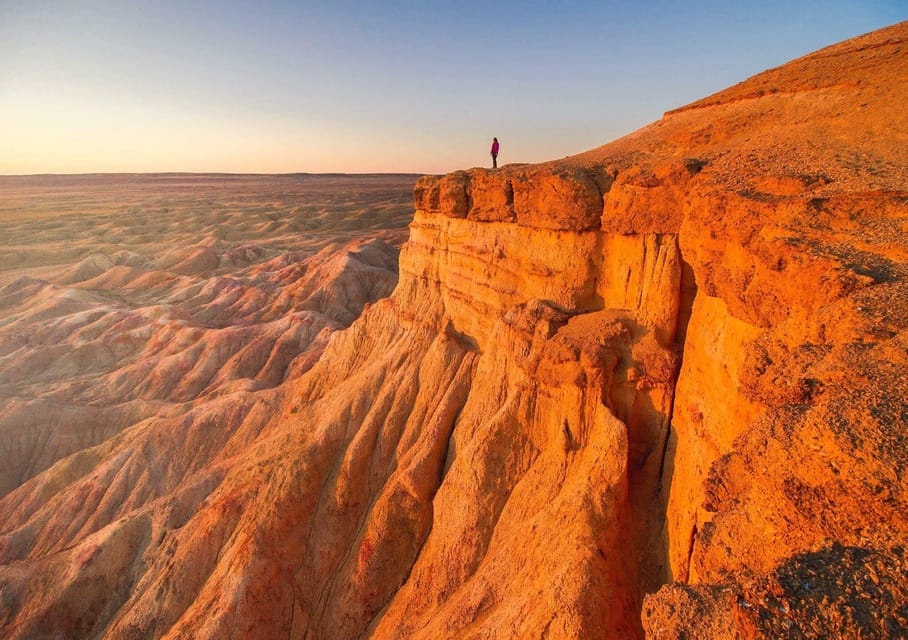
Famous for the discovery of the first dinosaur eggs in 1923. The red sandstone formations glow during sunset.
A UNESCO World Heritage site representing the evolution of nomadic pastoral traditions. The valley is home to the stunning Orkhon waterfall.
Natural hot springs emerging from the ground at 86 degrees Celsius. These waters are rich in minerals and used for therapeutic purposes.
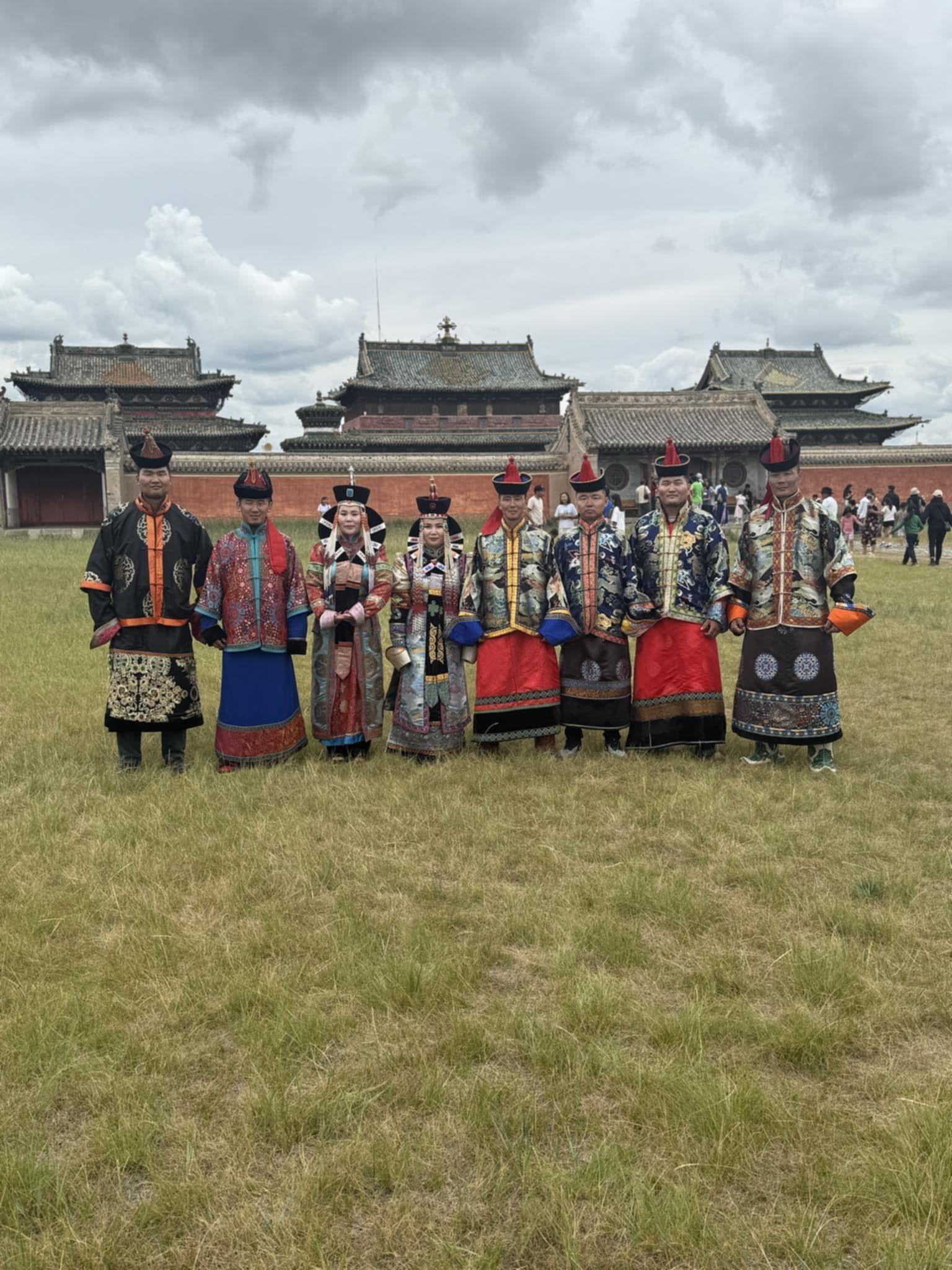
Constructed in 1586, this is one of the oldest surviving Buddhist monasteries in Mongolia. It is surrounded by a massive wall with 108 stupas.
These paths offer distinct experiences; travelers who prioritize ecological contrast choose the gobi and central mongolia tour, while those seeking singular arid environments prefer the Deep Gobi Desert Expedition.
| Feature | Top pick Central/Gobi Loop | Deep Gobi Expedition |
|---|---|---|
Terrain Diversity |
Steppes, forests, and desert | Exclusively arid desert landscape |
Travel Stamina Required |
Moderate endurance | High physical endurance |
Driving Intensity |
High daily transit | Extreme multi-day off-road travel |
Major Sight Variety |
Monasteries, rivers, and dunes | Sand dunes, canyons, and fossils |
Photography Focus |
Diverse cultural and landscape | Minimalist desert and night sky |
| See tickets → |
Verdict: Select the gobi and central mongolia tour tours if you desire a comprehensive Mongolian introduction, or book gobi and central mongolia tour tickets for the specialized Deep Gobi Expedition if you prefer a focused desert immersion over gobi and central mongolia tour tour variety.
Choose your ticket, select your date, and reserve in under two minutes. Secure checkout handled by our verified partner.
Instant confirmation by email, with a mobile voucher you can save offline. No printing, no queuing at a collection desk.
Arrive at the entrance, show your voucher on your phone, and walk in. Most tickets include priority or skip-the-line access.
Best time to go, insider tips, nearby landmarks, and the cancellation fine print — flip through to skim what matters to you.
How crowds, weather, and events shift across the year.
June to August offer the warmest temperatures and the most stable conditions for exploring the Gobi and Central Mongolia.
Small details that turn a good visit into a great one.
Drink more water than usual due to the arid Gobi climate. Keep a constant supply of bottled water in the vehicle.
Non-bookable sights within a short walk — free to visit, easy to pair.
Historical Buddhist site in Ulaanbaatar
Flexible, no hidden fees.
Cancellation policies depend on the specific provider. Refunds for the entrance fee are not applicable as there is no single entry fee for the region; individual national parks charge fees.
Hand-picked options within walking distance — pick a district for vibe, or a specific hotel for convenience.
Upscale hotel in the city center
Karakorum, capital of the Mongol Empire, functioned as an imperial city for barely forty years before Kublai Khan moved the seat of power to Khanbaliq. What remained was dismantled. Stone from the abandoned capital was carried a short distance downhill in 1586 and rebuilt as Erdene Zuu Monastery, whose enclosing wall carries 108 stupas. The number is not decorative. It corresponds to the beads of a Buddhist mala. This layering explains why a gobi and central mongolia tour covers ground that looks empty and is not. The Orkhon Valley, inscribed by UNESCO in 2004, holds two millennia of nomadic administration in a single river corridor: Turkic memorial steles, Uighur ruins at Kharbalgas, and the Mongol capital itself. West of Ulaanbaatar the Khugnu Khan massif rises from grassland, and at its foot lie the Elsen Tasarkhai sands — a narrow dune belt roughly 80 kilometres long, often called the mini Gobi. Geologists treat it as an outlier of the greater desert system rather than its edge. Hustai National Park, established in 1993, occupies a different register. The takhi, or Przewalski's horse, was declared extinct in the wild in 1969. Reintroduction began at Hustai in 1992 with animals bred in European zoos. The population now exceeds 400 and grazes the same hillsides that hold Bronze Age burial mounds and Turkic stone men. Descriptive Ulaanbaatar steppe tours group these three sites because the geography permits it: dune, monastery and reserve fall within a single arc of the Tuul and Orkhon watersheds. The region charges no unified entrance fee — 0 MNT — though individual national parks levy their own. The landscape has no gate and no closing hour, listed as 00:00–23:59 across all seven days. What governs access is distance. Paved road ends early on most routes; the remainder is track. Small group gobi and central mongolia tour formats persist here for that reason, since vehicle capacity, not ticketing, sets the limit. Ger camps supply the accommodation, as they have for herding families for centuries, and the felt walls still face south. The desert steppe is not a backdrop to Mongolian history. It is the archive.
"The desert steppe is not a backdrop to Mongolian history — it is the archive."
Many remote areas of the gobi and central mongolia tour are off-road and may not have standard accessible facilities. Please contact your operator to discuss mobility needs.
Pack sturdy hiking boots, layers for temperature shifts, and sun protection for your gobi and central mongolia tour. A portable power bank is also recommended.
Cancellation policies for a gobi and central mongolia tour are set by the individual operator. Please review your booking confirmation for specific refund terms.